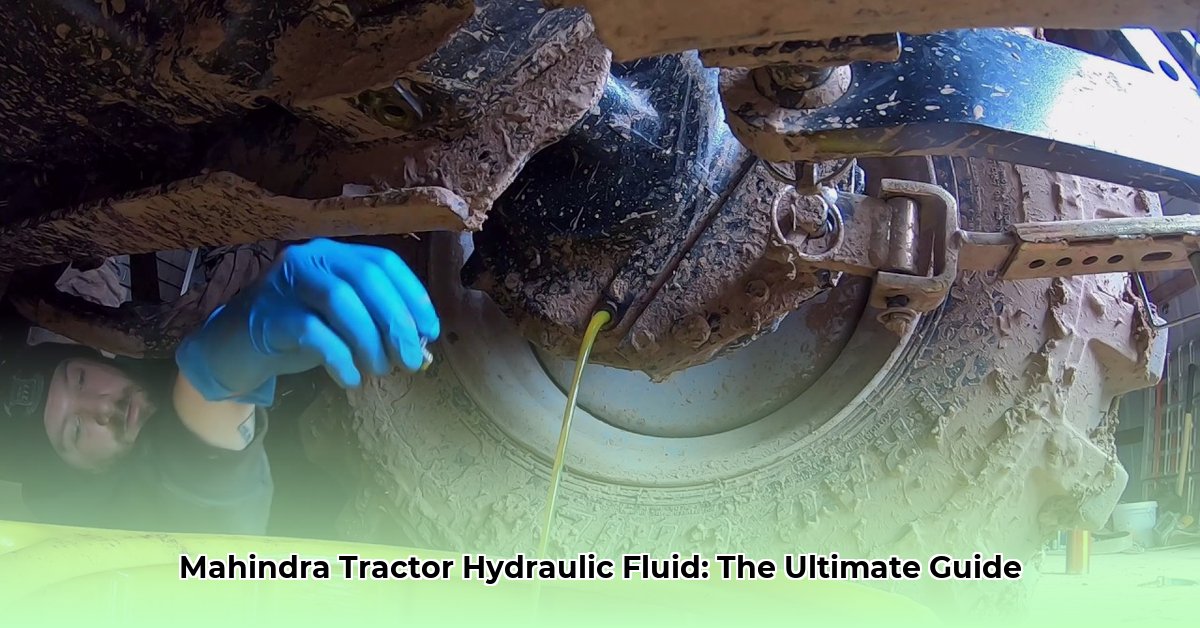
Keeping your Mahindra tractor running smoothly requires more than just fuel; proper hydraulic fluid is crucial. This guide helps you select and maintain the right hydraulic fluid, ensuring peak performance and longevity for your tractor. For more detailed information on hydraulic fluid selection, check out this helpful resource: Hydraulic Fluid Guide.
Understanding Your Tractor's Hydraulic System
Your Mahindra's hydraulic system is vital for powering essential functions like lift arms and steering. The hydraulic fluid is the lifeblood of this system; using the wrong fluid or neglecting routine maintenance can lead to expensive repairs. Always consult your owner's manual for specific recommendations tailored to your Mahindra tractor model. This is paramount for safe and effective operation.
Choosing the Right Hydraulic Fluid
Mahindra recommends specific fluids, but suitable alternatives exist. Selecting the right fluid involves considering several factors:
Fluid Types:
- Petroleum-based: These are common, readily available, and relatively inexpensive. However, they generally have shorter lifespans than other options.
- Synthetic: These offer longer lifespans and superior performance in extreme temperatures (both hot and cold), and harsh operating conditions. They are more expensive upfront.
- Water-based: These are more environmentally friendly, but their use is less prevalent in agricultural applications, and they may have limitations in extreme temperatures.
Do you have a specific hydraulic system need that influences your choice of fluid? For example, the type of transmission (hydrostatic, etc.) may dictate specific fluid requirements.
Operating Conditions:
The conditions under which you operate your Mahindra significantly influence fluid selection. Extreme temperatures (high heat or extreme cold), dusty conditions, or high usage all necessitate fluids designed to withstand such stresses. Think of it like choosing engine oil; using a summer-weight oil in winter is not advisable.
Tractor Type:
Refer to your owner's manual for specific fluid recommendations. Ignoring these recommendations could void your warranty and risk damaging sensitive hydraulic components.
Maintaining Your Hydraulic System: A Preventative Maintenance Plan
Regular maintenance prevents costly repairs. Follow these steps:
Check Fluid Level Regularly: Locate the hydraulic fluid reservoir (clearly marked in your owner’s manual). Check the fluid level against the markings. Add only the recommended fluid type if needed. Incorrect fluid can cause significant damage. How often should you check? Your owner's manual will provide guidance; a good practice is before each use.
Monitor Fluid Condition: Periodically inspect the fluid's clarity and color. Dark, cloudy fluid, or fluid containing grit, indicates wear and tear, necessitating a fluid change. When should you expect a fluid change? This varies based on usage and fluid type.
Change Fluid on Schedule: Your owner's manual specifies the recommended fluid change intervals. This depends on factors such as fluid type and usage intensity. Following this schedule is crucial for optimal performance and longevity. Synthetic fluids typically last longer than petroleum-based options.
Dispose of Used Fluid Responsibly: Never dispose of used hydraulic fluid down the drain or onto the ground. Check local regulations for proper disposal at designated hazardous waste collection points. Failing to do so exposes you to potential environmental penalties.
Balancing Cost and Performance: A Long-Term Investment
While choosing a cheaper fluid might seem appealing, the potential for costly repairs resulting from fluid breakdown outweighs short-term savings. A higher-quality fluid, even if more expensive upfront, will often extend the lifespan of your hydraulic system, saving money in the long run. Is saving a few dollars on hydraulic fluid really worth risking thousands in repairs later?
Troubleshooting Hydraulic Issues
If you notice unusual behavior—slow response, leaks, or strange noises—address them promptly. Consult your owner's manual or contact a qualified Mahindra mechanic. Early detection prevents larger problems and more expensive repairs. What are the most common signs of hydraulic system malfunction? Consult your manual for a detailed list of symptoms.
Choosing Alternative Hydraulic Fluids: A Comparison Table
The following table compares different fluid types. Remember: This is a general guide. Always confirm compatibility with your specific Mahindra tractor model and consult your owner's manual.
| Fluid Type | Pros | Cons | Mahindra Compatibility |
|---|---|---|---|
| Mahindra-branded Fluid | Optimized for your Mahindra; guaranteed performance | Generally more expensive | Always recommended |
| Equivalent Synthetic | Longer lifespan, superior performance in extremes | Higher initial cost | Verify specifications |
| Equivalent Petroleum | Lower initial cost | Shorter lifespan, less effective in extremes | Verify compatibility |
Remember, this guide offers general information. Your owner's manual provides the most accurate and up-to-date instructions for your specific Mahindra tractor. Regular maintenance and using the correct hydraulic fluid are essential for years of reliable operation.